Thursday, 6 March 2014

Snapchat: Rising From Obscurity To Compete With The Giants

Is Snapchat Now Competing with Facebook and The Other Social Media Giants?

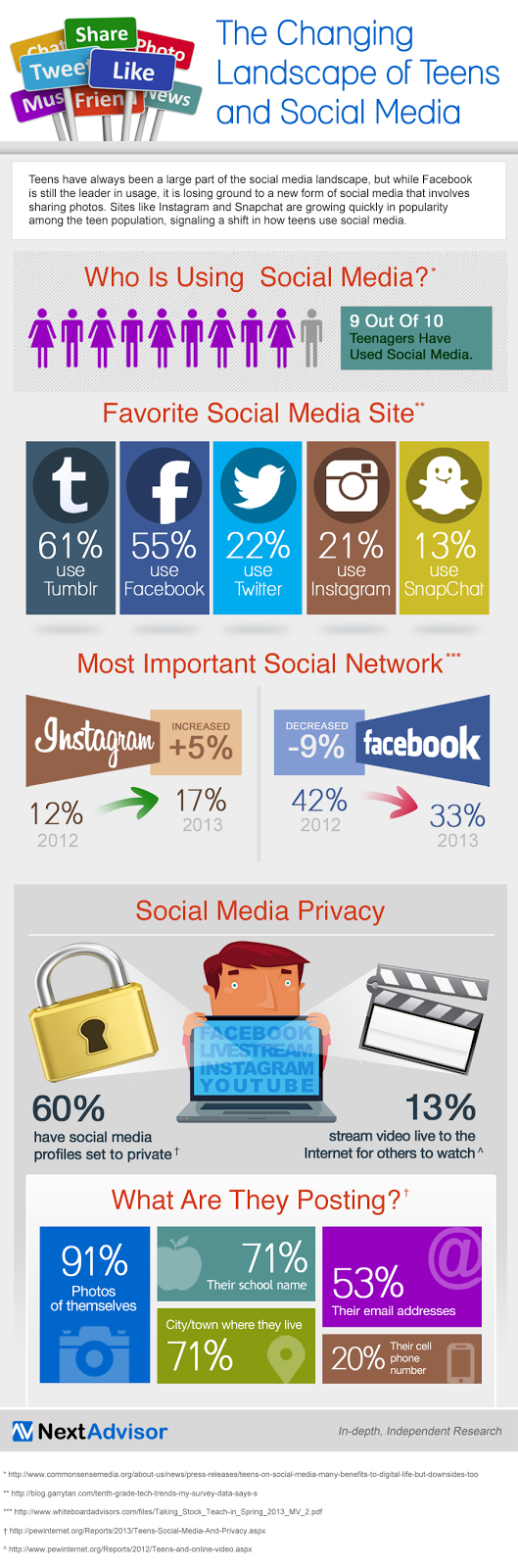
No teenager wants to be on the same social networking as their parents right? The view now is that brands have been slow to recognize that Facebook is losing its niche in the social networking market and teenagers are now look for new more inventive ways to socialize with their friends. 

This is where Snapchat comes into play. In an era where the competition for consumers’ attention is so fierce a message that will disappear in a matter of seconds is one that demands their full attention. Neil Major, strategy director at Yomego, says the time-limited nature of Snapchat offers brands an interesting new channel, "You can see how it would work for sneak peaks and teasers for films." 

In regard to young people, they are now displaying ever increasing signs of Facebook fatigue and it is now important for marketers to recognize new platforms such as Snapchat and the shifting consumer behaviors they reveal. "Snapchat reflects how everything is becoming very real time and ephemeral. Part of the allure of the app is the experience of loss when the image disappears, which builds excitement," adds Carat's McCreary.

"The Facebook effect"
Before the days of Facebook peer pressure was in regards to now, very simple. There would be a crowd of  "cool kids" and an uncertain kid who inevitably has a swig of alcohol or a puff on a cigarette. The view is now that people have this idea that their lives are boring when seeing pictures of all their friends having fun drinking etc online, and this is "The Facebook effect". There has even been a very popular book written on this, which you can find here
It is thought that Snapchat goes in the opposite way of this peer pressure, as people would usually use it to send ugly 'snaps' of themselves to friends and not worry how they look. Anne McCreary, the digital strategy director at Carat, says that "Facebook puts an enormous pressure on teens to look a certain way, whereas Snapchat is free of the baggage of scrutiny". 

Seeing this constant flow of young people from one social media to another its clear that large companies need to make full advantage of the ever expanding users on Snapchat to market their products, which will get them straight into the pockets of their customers with personalised messages and without the boring monotonous emails they receive so regularly.

Looking at all this its clear to see why Facebook tried to buy Snapchat for £3  billion and also clear why Snapchat rejected the offer, which is very well described in this article - Why Snapchat rejected Facebook

Thursday, 21 November 2013

Email Marketing: The best marketing tool?

Is Email Marketing the best marketing tool?

Email marketing is directly marketing a commercial message to a group of people using email. In its broadest sense, every email sent to a potential or current customer could be considered email marketing.

We receive emails everyday, and most of them we choose to ignore, so its usually a case of whether the brand has targeted the product they are trying to sell to the individuals and enticed the reader to want to read their offer. 


I went through my own emails and looked for ones that would jump out at me and usually what we want is it to get straight to the point. An example I found was a Cadbury Email: 

In this Email it can be seen that the company has seemed to write to me personally by adding my name at the beginning. It has chosen to make the Email as simple as possible and also given directions of what to do once you have clicked the link.


Once I clicked the link it took me to this landing page. This page is very easy to understand and has easy step by step instructions what to do to claim my free coupon for the chocolate bar. In many cases of poor Email marketing the landing page has nothing to do with the actual email, and usually takes the individual to the homepage. 


To conclude whether Email marketing is the best marketing tool, it can be seen that in the scenario given in this blog it is a very powerful tool, seeing as I would never had been on the Cadbury website to try their chocolate if they hadn't emailed me this promotional offer.


Wednesday, 20 November 2013

Google Analytics: Trying to make sense of it

Google analytics is an amazing free tool that is often under utilised. You certainly don’t need to pay for a web analytics tool unless you are using Google analytics to it’s maximum.

Dashboard
The first place to start making sense of things clearly has to be the dashboard. A dashboard is a one page view of some of the most important information that is relevant to your business. You might create a dashboard for a standard report you want to run every week. When this report is created it can automatically be sent to relevant people. Creating custom dashboards is quite straight forward.

Dashboards got a much needed overhaul in the new Google Analytics. Users can now create up to 20 personalized dashboards, developing widgets and formats that make the most sense for them or their company.

In the case of my dashboard, I have chosen to insert the location of the visits,which as we can see are in the South East of England, I have also put in the different type of browsers that have click on my blog. Lastly there is a section for the average visit duration, which is shown by a timeline. This all can be changed regarding on what you want to be on your dashboard.


Annotations
When you view a traffic report over the last year and you see some spikes or dips how do you know what they are related to? You may have a memory like Einstein but for the rest of us we need reminding.Google allows us to tag charts so we can review these at a later stage and understand what happened at that stage.To put in an ‘annotation’ just click a part of the graph and type in the information.
Lastly if there is anything you may need help with doing on your analytics page e.g. Integrating AdSense then visit here


Thursday, 17 October 2013

Big Data: Child Survival rates

I watched a video for a few minutes with Hans Rosling talking about many different factors of 'Big Data'. Linked below:

http://www.ted.com/playlists/56/making_sense_of_too_much_data.html

In one part of the video he talks about child survival and how there are large differences of child survival in neighboring countries for example, where Sri Lanka had a much higher child survival than the close neighboring country  of Afghanistan.
He also continues to show how in the early 1960's China had a very low child survival rate but as Mao Tse-Tung came into power, he brought wealth to China so they gradually increased their child survival rate up until nowadays where China were in the same league as the elite countries, such as Sweden, U.S.A etc.

From looking at this small snippet of the video and thinking in a market view it can be seen that certain countries clearly market themselves better than others, which in turn creates wealth to the country, which therefore increases the child survival rate. This can be seen mostly in the example of China from 1960 onwards, because they've marketed their work and workers so well that many countries are now looking to do a lot of their business there; which inevitably has increased the standard of living and the child survival rate.

Tom's first blog

I'm blogging lolz